
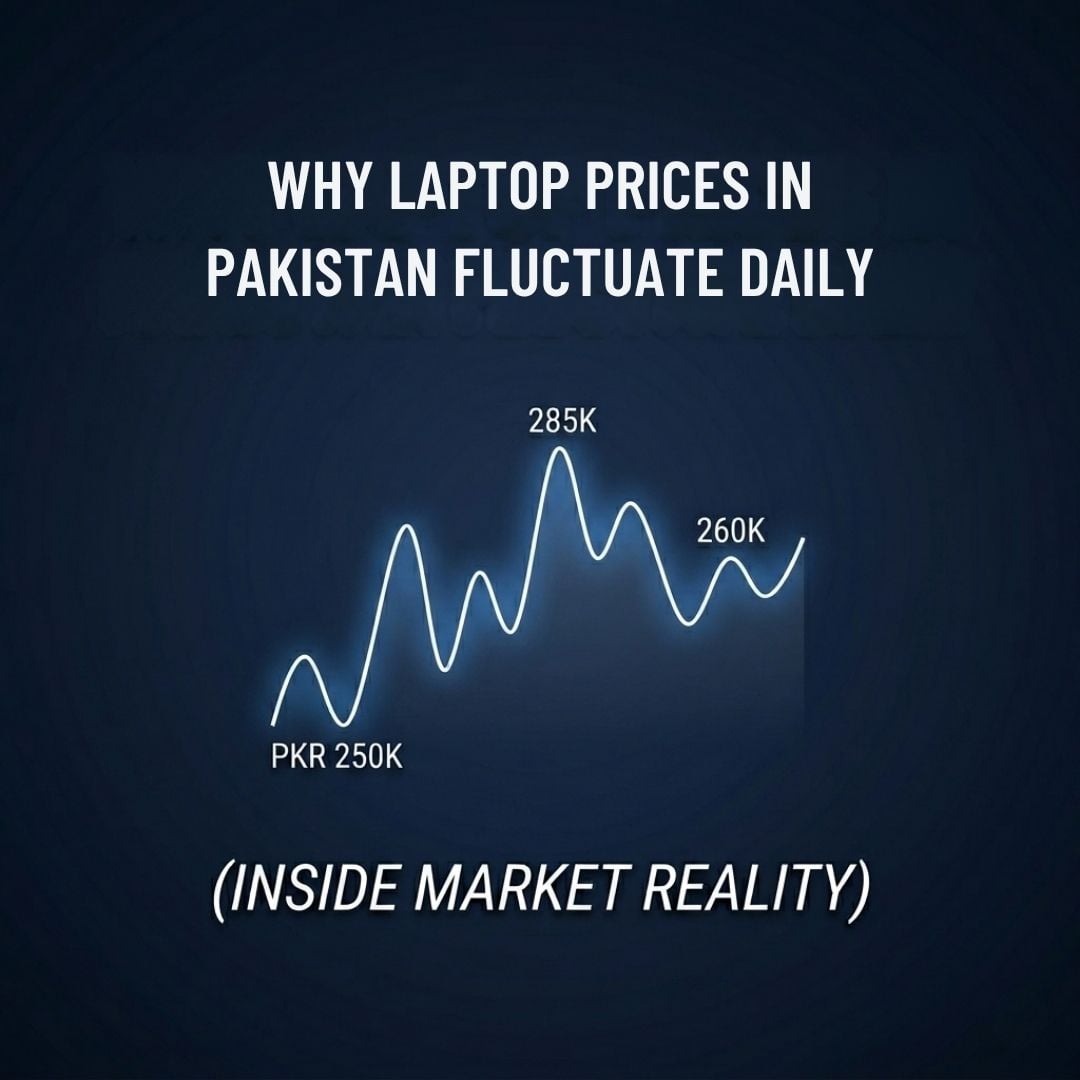
Buying a laptop in Pakistan is no piece of cake, and there are a hundred reasons why. But the most irritating and infuriating reason remains the ping-pong of price. You got that right… Laptop prices in Pakistan fluctuate as if it's gold we’re talking about.
Just imagine checking the price last week, making up your mind, finally pulling together the amount, and then a week later, the price has gone up by PKR 8,000. And no, this is not a rare one-off; it’s the reality of Pakistan's tech market. But why so?
Because the retail rates are tied to certain factors that are sometimes beyond even the sellers’ control, and in this blog, we’ll be breaking down those exact reasons, so you can dodge as many of them as you can. So stick with us till the end.
Reasons Behind the Daily Laptop Price Change in Pakistan
It’s no secret that Pakistan does not manufacture computers (it’s just not our A-game). So whatever comes to us is subject to price fluctuation because of the following reasons.
The Dollar Effect
The most important factor that results in notebook price hikes is the value of the dollar in relation to the Pakistani rupee (showed volatility in 2025-26 from PKR 260-310). Since almost every notebook sold in Pakistan (be it a Dell, Lenovo, or MacBook) is imported, it’s priced in dollars.
To understand better, imagine you’re looking at an entry-level device that is valued at $599 on the company’s original site. After translation, this amount becomes, let’s say, PKR 170,000. But the dealers in the market and local websites are charging PKR 250,000. You say it’s unfair, but to the market locals, it’s basic math. The retailers are charging you what they’ve paid for, and it’s totally fair because nobody would want to deliberately suffer loss.
Multiple Tax Layers
Pakistan has a 0% basic customs duty on computers, which is honestly a relief, thanks to the new IT policy. But don’t get too excited… There are other layers of taxes that affect the final rate. Starting from the very obvious sales tax of 18% (no way of dodging this one). After that, there is the 11% income tax (for non-filers) or 1% tax (for filers).
These are the basics, but you should always be ready for periodic bumps. Like back in fiscal year 2024-2025, the tax rate hiked from 5% to 10% out of literally nowhere. Now you must be thinking that these tax hikes only affect the new stock that’s freshly crossed the border. News flash: it affects everything! That 2-month-old device, which has been collecting dust in the warehouse, yes, even that one took the hit.
Global Chip Shortage
Curse Covid because the RAM and SSD shortage that started during the pandemic has been casting a shadow over notebook prices even today. And this is not just a Pakistani problem; it’s a global shortage affecting product rates at their core. RAM and SSD are crucial components of a PC.
The problem is that already there are a few global manufacturers producing them. So whenever any disturbance strikes, be it a factory shutdown, export restrictions, or even increased demand, the entire industry suffers from the high rates. Naturally, Pakistani importers (who buy in bulk) raise the rates locally so that the burden of this cost jump is borne by the ultimate user (yes, you!).
The Inflation Side-Effect
At this point, the word inflation is synonymous with Pakistan. Jokes apart, it’s not just the food and fuel that are hit by inflation; the notebook that you’d been eyeing would also take the blow. How? Two words - Operational! Costs!
Dealers don’t absorb the overhead costs of their business. Never! By increasing the notebook retail prices, they charge you the shop rent (or website maintenance), salaries, electricity, and most importantly, the logistics. Even if the dollar stays stable and the duty rates remain low, the dealers will adjust the prices to make sure their margins are uncompromised.
High Demand Pricing
Most Pakistanis purchase notebooks at the beginning of their first university term or are gifted by their parents after the results of the board exams. So whenever the demand for a notebook spikes, the price also spikes. As for the supply, it doesn’t matter if the warehouses are loaded with stock.
Because dealers know of the peak sales season (thanks to their experience), they adjust the rates accordingly. It’s normal market behaviour, but it catches the buyer off guard. So if you’re planning to buy a brand-new notebook during peak season, you should know that there is someone out there who has bought the exact same thing for way less just a few months back.
Brand Pricing
Enough blaming the dealers, often it’s the manufacturers messing with the pricing. Big brands like Dell, HP, Lenovo, and Apple (which set their pricing in USD) revise their price list every now and then. It’s a common brand strategy to change the pricing whenever there’s a new model to be unveiled.
Sometimes this change is genuine because the OEMs themselves suffer a shift in component costs. Now Pakistan has no official pricing authority, so the local dealers just follow whatever price the brands are setting. Of course, they account for the add-ons like taxes and margins, but the base price is dictated by the big bees.
Political Uncertainty Tax
Pakistan’s political landscape is complicated to say the least. But how does it come between you and that notebook? You see, whenever there is political instability in the country (protests, government changes, etc.), the rupee weakens and the importer's confidence drops. Thinking that the upcoming shipments could cost them a foreign currency exchange loss, the importers start charging retailers more.
Considering this, often the dealers informally increase the rates because (again, based on experience) they know what’s coming for them. This informal increase is what we call the political uncertainty tax, which is a sad reality of our tech market because guess who ends up footing the bill? The consumers!
Karachi Port Pressure
Most of the imported devices reach the country through Karachi port. Now Karachi port is one of the busiest ports in the world; it’s obviously going to be chaotic. So, due to custom backlogs, documentation issues, logistics or just general port infrastructure issues, shipments are delayed.
While the importers deal with the backend meltdown, the existing stock in the market shrinks. And that’s where things start to go downhill from there. Supply decreases, demand increases, and as a rule of thumb, the price also goes up. Now, port shipment delays are more common than you can think. But here’s the catch: sometimes importers intentionally hold back stock to profit from the hike.
How to Smart Buy During Rising Laptop Prices?
Laptop rates in Pakistan are wildly unpredictable, but a few smart tricks can save you a huge amount of money. Head below to check them out.
- Schedule your purchase during the off-peak months like January and June when student demand is at its lowest.
- Keep in touch with reputable dealers like Paklap to stay updated on the daily lists and never miss a price dip.
- Monitor the dollar religiously and when it's stable for consecutively two to three weeks, consider it a sign to buy.
- Avoid buying right after a federal budget has been announced, as the customs duties might have increased.
- Do not impulse buy without confirming rates from multiple sources.
- Prioritise online stores because their overhead costs are less compared to local shops (website maintenance vs shop rent and maintenance), which results in significantly higher margins.
Conclusion
Laptop prices in Pakistan might come across as random, but there’s a lot that goes on behind the scenes. From dollar effect fluctuation to global chip shortages and customs duties, there’s a complex chain reaction altering the tags every day. Understanding these forces doesn’t just satisfy your curiosity; it gives you an edge over a regular buyer.
Trust us, smart buyers are rarely lucky, but they are well-informed. So now that you know what triggers the price hikes of PCs, and how to avoid them, make sure to act fast and smart. Position yourself to avoid the traps and spend your money wisely!