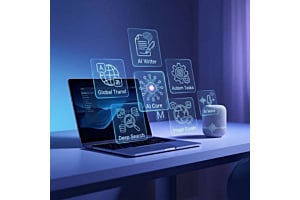

Remember when the idea of laptops that could talk, hear, or watch your movements felt kind of… fake? Yeah, that joke didn’t age well. 2026 pulled up with the wild card featuring all three of the famous sci-fi movies, leaving the audience literally dumbfounded.
Courtesy of AI, modern laptops aren’t just working, they’re observing. These machines are probably more aware of you than you are of yourself. They hear you, track your gaze, read your gestures, and decode them before you can even form a sentence. All this effort, just so the laptop can interact with you.
2026 laptops are all about human-computer interaction. Be it voice commands, eye commands, or gestures - whatever it is, you name it, AI has it, and more.
Human-Computer Interaction - End of Click-Centric Computing
For decades, the whole laptop-human interaction mechanism depended upon clicks, keys, and presses. But in 2026, that way of operation is finally taking a turn (and, for good). The overall laptop design is being redesigned in a way that it naturally responds to humans. So, instead of the manual clicking of keys, users will only have to express their commands.
With the help of smart sensors, microphones, cameras, and the MVP - AI, your laptops will soon become more independent. They’ll be able to detect basic movement, interaction, and even intent, which is crazy considering that laptops are machines at the end of the day. And the goal of it all isn’t heavy interaction; these new laptops will aim for light everyday operations (which we’re loving, by the way).
Hardware Innovations in 2026 Laptops
The hardware innovations in laptops basically aim to support the interaction between a laptop of 2026 and its user. These innovations are somewhat the base of what the future laptop hardware design has in store for us.
Advanced Microphones for Voice Commands
Imagine Siri, but in your everyday use laptops. Sounds fascinating, no? The laptops in 2026 are going to possess such qualities as they’ll use high-quality microphone arrays. The reason? To pick up your voice clearly from across the room (even in a noisy one) for voice commands. These arrays work with on-device AI chips to kind of process sound the second it’s uttered from your mouth. This makes voice commands faster and easier to understand with more reliability. It’s because of these microphone arrays that you can enjoy hands-free control, which feels natural (whether you’re dictating text or just interacting with AI assistants).
Depth Sensors & Motion Cameras for Gesture Control
Built-in infrared cameras, depth sensors, and motion detectors are the three new components that’ll be making an entry in the 2026 hardware design. These components are responsible for all kinds of gesture-based interactions. The main goal of these sensors is to track your hand and finger movement in mid-air. These sensors will allow you to zoom, swipe, scroll (and basically manipulate) objects without actually touching the screen. This reduces your reliance on keyboards and touchpads, giving you a more touch-free virtual experience (the kind they featured in cartoons).
Infrared & Optical Sensors for Eye-Tracking
Eye-tracking in 2026 laptops is only possible because of infrared cameras and optical sensors that are built around the screen bezel. The sensors shine invisible infrared light right into your eyes and detect reflection from the retina and cornea. By deeply checking out these reflections, the system figures out exactly where on the screen your eyes are looking. Now, what does this mean from a futuristic POV? Firstly, you can scroll based on your gaze. No need to touch a trackpad or any keys. The same goes for context-aware notifications, which don’t need our fingertips to be accessed. And just like that, elements on your interface (like menus, toolbars, and buttons) can move or expand according to where your eyes focus.
Low-Latency Displays & Environmental Sensors
Low-latency display basically means that your screen updates almost instantly when you do something. Even the smallest of movements, like scrolling the cursor or using gestures, can be done without that annoying lag which usually comes in a traditional laptop.Then we have environmental sensors! These tiny detectors notice things like the lighting of a room or background brightness. Based on this info, the system adjusts your screen’s brightness, changes contrast, and tweaks performance to make the features on the screen easier on your eyes.
Top Human-Computer Interaction Trends in 2026 Laptops
Tech trends never stay the same - that’s a fact, but 2026 is the year we officially enter the future. Below, we have mentioned the top trends around user-interaction with the modern-day laptops.
Multi-Modal Interaction
The meaning of multi-modal interaction is simple - one laptop with more than one mode of interaction (all working at once). What’s the need for it, one might wonder.Simple - instead of relying on a single method of interaction (which is typing), users can switch between multiple modes (like voice-commands, eye-commands, and gestural commands). All this switching between communication modes is based on the user’s comfort and task complexity. This flexibility speeds up the workflow, whether it’s corporate, creative or gaming. In 2026, laptops, this approach makes sure that users aren’t forced into strict patterns of communicating with the laptop (leaving the experience feel less mechanical).
AI-Driven Interaction & On-Device AI
AI-driven interaction is all that matters in a 2026 laptop, and for all the right reasons. With more and more intelligence being handed over to the computers in 2026, the responses are also supposed to bounce back faster. Since on-device AI means less reliance on internet access (constantly), your laptop will react better to your commands. It’s basic math, you ask a question, the AI chip in your laptop answers. There’s absolutely zero involvement of the cloud in replying to your queries (most of the time atleast).
Ergonomics & Accessibility
Modern human-computer interaction trends are meant to make your experience comfortable and inclusive at the top of laptop design. The changes in laptop ergonomics reduce physical strain during long sessions, especially for users with disabilities. In 2026, laptops are made to cater to users, not the other way around. For example, the screen and interface can adjust themselves based on how you sit, how close you are to the laptop, and how long you’ve been working. This protects your eyes and keeps you from feeling mentally exhausted, which is the whole point of the new design ergonomics.
Productivity Shortcuts
In traditional laptops, getting work done often meant repeating the same steps again and again. Opening menus, switching apps, and remembering keyboard shortcuts can actually be pretty tiring, mentally. Enter productivity shortcuts in 2026 laptops! Instead of digging through the same steps, these shortcuts make your workflow quicker, bringing actions to the end of a few clicks. Let’s take the smart app switching for instance; AI predicts which app you’ll need next and lets you switch swiftly. Similarly, there are context-aware quick actions, one-step task automation, and custom quick panels that save your time and effort.
Privacy & Ethical Concerns
With laptops becoming smarter with every new release, it's common for them to need more information about users. But the 2026 user is smart and cautious and doesn’t want to risk their privacy. That’s where the human-computer interaction trend concerning privacy sets clear boundaries. The 2026 laptops are supposed to process sensitive information safely and keep it on the device as much as possible. Transparency also matters, which is why users get all the know-how about what data is collected, where it will be used, and how it will be used. So, yeah, the 2026 laptops aren’t just smart, they’re respectful as well.
Conclusion
One thing everyone has to acknowledge is that laptops are no longer the dumb machines that follow you - now, they lead. As scary as it might seem, the new technology brings a ton of opportunities (to save time, effort, manage bulk workload and whatnot). And with the responsive voice, gesture and eye-tracking technologies, these laptops are going to make life easier.
Just imagine not having to move the cursor with precision every time you need access to a new app; your eyes are enough to do that. And the latest laptop trends taking over social media, which offer ease of human interaction, are actually quite explosive. Gamers, creators, and professionals all benefit from these new interactions alike, which is why we're here rooting for them.